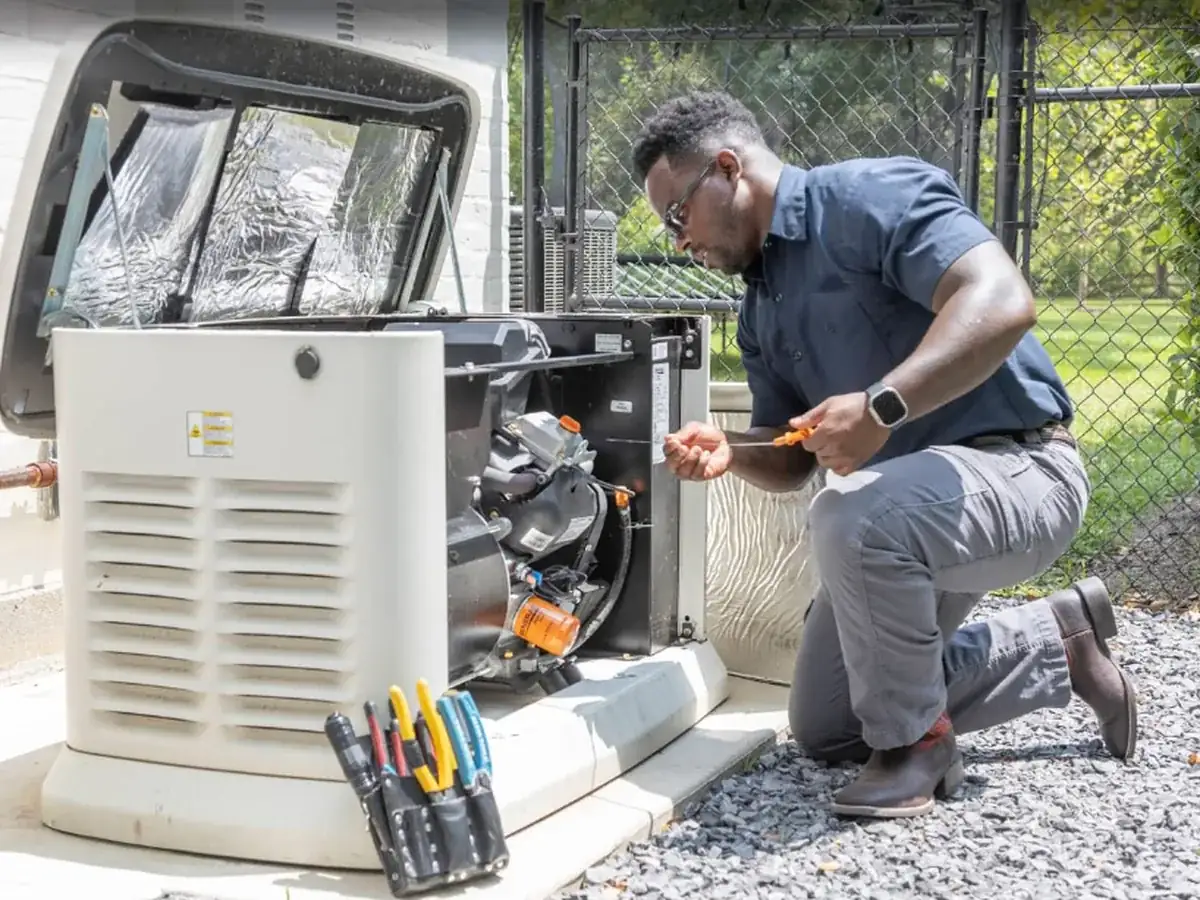
Next Phase Electric is a licensed and insured electrical contractor in Covington, WA, providing generator installation across South King and Pierce County.
PNW storms knock the grid out. Your home stays powered. Whole-home standby generators and transfer switches.
Book online
Enter your ZIP code. If we serve it, you pick the service and a time. It takes about a minute.
Whole-home standby or portable hookup. Right size, right circuits.
Sits outside, kicks on within seconds of an outage. Lights, HVAC, fridge, sump pump — all keep running.
Got a portable generator? We install an inlet box and manual transfer switch. No more cords through windows.
The brain of your backup. Detects outages, switches to generator instantly, sheds non-essential loads to prevent overload.
PNW windstorms knock out power for hours, sometimes days.
Winter windstorms and ice events take out power across King and Pierce County. Standby means heat on, pipes safe, family comfortable.
CPAPs, oxygen concentrators, wheelchairs, refrigerated meds — all need steady power. A generator delivers it.
An outage mid-workday means missed meetings and lost deadlines. Generator keeps router, computer, and monitors live.
Long outages mean spoiled food, flooded basements, frozen pipes. A generator stops the damage before it starts.
Consultation to commissioning. Every detail handled.
We check your panel, fuel options, and power needs. Clear recommendation on size and placement.
Generator, transfer switch, and wiring installed. Permits handled. Gas utility coordinated.
Simulated outage to confirm it works. Walkthrough on operation, maintenance, and warranty.
Generators are real electrical work — load math, code wiring, safe fuel, transfer switch that works every time.
WA-licensed, generator-trained. Every install.
Full cost before we start. No surprises.
Permits pulled, inspections booked. Fully code-compliant.
Labor warranty on the install. Manufacturer warranty on the equipment.
For many homes, yes, especially on a well, with electric heat, or with medical equipment at home. The November 2024 windstorm cut power to hundreds of thousands of PSE customers, and the last few thousand were still out a week later. A standby generator keeps heat, the fridge and pumps running through an outage like that.
A standby generator starts by itself in 10 to 30 seconds and can run the whole home on natural gas or propane. A portable costs less, but someone has to wheel it out, start it and keep it fueled, at least 20 feet from the house. If you are often away, or outages are a real problem, standby is the better fit.
Depends what you want powered. Typical Covington whole-home is 16–22kW. Critical circuits only is more like 10–14kW. We'll run a load calc and recommend.
Natural gas is ideal if you've got a line. Otherwise propane. We'll assess and recommend.
Propane is the usual answer. A tank sits outside, and Generac sets a minimum tank size of 250 pounds for its home standby units. Larger tanks run longer, and other propane appliances on the same tank reduce what the generator gets.
Yes, if it is sized for it. Electric heat is one of the biggest loads in a house, along with a range, a dryer and an EV charger. Many Western Washington homes heat with electricity, so we run a load calculation and can add load management to shed big loads before they overload the generator.
Yes, but plan for the gap. A standby generator takes 10 to 30 seconds to start, so a CPAP or oxygen concentrator stops briefly. Ask your equipment supplier about a battery backup to cover those seconds. We make sure those circuits are on the backed-up list.
60–70 dB — about a normal conversation. Far quieter than a portable. We position to minimize noise for you and the neighbors.
Outside on a pad, with clearance around it. Generac's guidance, based on NFPA 37, calls for 5 feet from windows, doors and vents, 18 inches from the wall for tested units, and 3 feet at the front and ends. Local rules come first, and we choose a spot that keeps exhaust and noise away from you and the neighbors.
The automatic transfer switch detects the outage, the generator starts, and your circuits switch over in 10 to 30 seconds. When utility power returns, the switch moves the house back and the generator shuts down. Nobody has to be home.
A standby generator runs as long as the fuel lasts, with stops for checks. Generac calls for a shutdown and inspection after every 24 hours of running, including the oil. Natural gas does not run out like a tank, but heavy demand can lower the supply, and a propane tank has to be sized for the run time.
1–2 days for a standby install once equipment arrives. Pad, generator, transfer switch, fuel line. Portable hookups are usually half a day.
Yes — electrical permit, plus a mechanical permit for the gas connection. We handle permitting and inspections to current WA code.
Four things set the price: the size of the generator, how much of the house it backs up, the distance to the panel and the fuel line, and whether the panel needs work. We check your panel, fuel options and power needs first. The exact price comes upfront, and you approve it before any work starts. See what sets the price.
Next Phase Electric installs standby generators, automatic transfer switches and load management in Buckley, Graham and nearby cities. In those areas a long outage can mean no heat and no well pump. We are licensed and insured, and we test each install with a simulated outage.
Don't wait for the next outage. Free assessment, upfront quote.
Already own a portable generator? This is the page for hooking it up safely.
The restore moment after an outage is a surge.
Learn moreTransfer switch and panel capacity together.
Learn moreAppliances dead after an outage.
Learn moreBreaker Replacement · EV Charger Installation · Outlets & Circuits · Safety Inspection · All services
Generator installation by city: Covington · Kent · Auburn · Federal Way · Des Moines · Tacoma · Puyallup