Fine until the dryer starts, then click. The start-up surge is finding the weakest point — and that point is fixable.
Three causes cover almost every call we get for this.
Microwave on the same circuit as the toaster and the fridge. Each is fine; together the start-up pushes past the breaker.
A 15 A circuit feeding a 1,500 W microwave or a window AC. Wire and breaker sized to the appliance is the fix.
A compressor with a weak start capacitor, or a breaker that now trips below its rating.
Takes a minute, costs nothing, fixes it more often than you would think.
Turn off everything else on that circuit and try the appliance again. If it holds, it is a shared-circuit problem.
Still happening? That's our job.
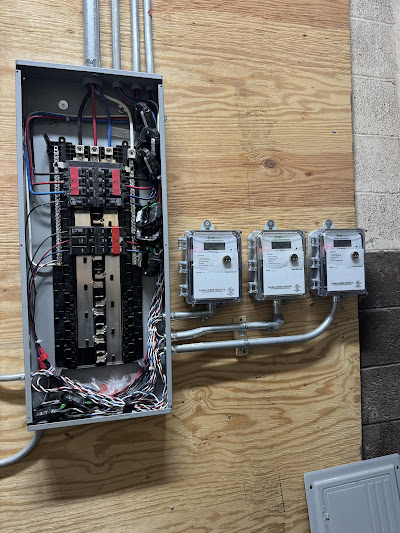
Fitting a larger breaker to stop the trips removes the protection on the wire in the wall.
Online or by phone. A technician reaches out within 1 business hour.
Traced to the box or device it lives in. Exact price before any work, you approve it first.
Right parts, tested under load, next connection checked so it does not come back.
A breaker that trips exactly when an appliance starts is reacting to the appliance's start-up surge, which can be three to seven times its running current. Either the circuit is shared with other loads, the circuit or breaker is undersized for the appliance, the appliance's motor is failing and drawing more than it should, or the breaker has weakened with age. A correctly sized dedicated circuit fixes the first two, which is most cases; we measure the surge with a clamp meter and tell you which it is.
Yes. New circuits are permitted and inspected by L&I in Washington; we include it in the job.
Most dedicated circuits are a half-day job. Replacing a weak breaker is under an hour.
Exact price after we see the panel and the run, before any work starts.
Yes, and we tell you. A clamp meter shows whether the surge is normal for the appliance or far above it.
Licensed electricians across South King and Pierce County. Exact price before any work starts.